SWOT Analysis
Strengths
- •Advanced AI Architecture (supervisor-collaborator design)
- •Real-Time Data Integration (multi-source feeds)
- •Institutional Risk Framework (Sharpe ratio optimization)
- •Transparent Decision Logic (LLM-generated explanations)
- •Scalable Technology Stack (AWS, Kubernetes, ClickHouse)
Weaknesses
- •Model Dependency (forecast accuracy tied to ML performance)
- •Data Latency (30-60 second delays in real-time feeds)
- •Regulatory Uncertainty (autonomous trading scrutiny)
- •Cold Start Problem (new users lack historical data)
- •Operational Complexity (multi-exchange integration)
Opportunities
- •Institutional Adoption (hedge funds, family offices)
- •Geographic Expansion (Asia, Europe markets)
- •Ecosystem Integration (wallets, DEX, staking)
- •Adjacent Products (yield farming, derivatives hedging)
- •API Licensing (data feeds for third-party platforms)
Threats
- •Regulatory Clampdown (autonomous trading restrictions)
- •Market Volatility (cascading rebalancing losses)
- •Competitor Consolidation (exchange-launched tools)
- •Model Degradation (structural market changes)
- •Cybersecurity Risks (exchange API compromises)
Financial Model Implications
Average Project Value
$100K - $500K
Enterprise focus; 41+ projects delivered
Annual Revenue (Estimated)
$5M - $20M
Based on project count and service mix
Gross Margin
50-65%
Professional services industry standard
Operating Margin
15-25%
After accounting for sales, marketing, R&D
Customer Lifetime Value
$250K - $1M+
Managed services and recurring revenue
Sales Cycle
3-6 months
Enterprise sales typical cycle
Revenue Model Analysis
GreyZone Intelligence operates on a hybrid revenue model combining project-based and recurring services. The professional services model generates high margins but requires significant personnel investment. The shift toward managed services and recurring revenue contracts is critical for improving predictability and customer lifetime value.
Project-Based Revenue (40-50%)
High-value engagements with significant upfront revenue but variable timing and customer concentration risk
Recurring Revenue (50-60%)
Managed services, support contracts, and training generate predictable revenue with high customer lifetime value
Strategic Positioning
Market Position
GreyZone Intelligence positions itself as a trusted enterprise technology partner providing comprehensive, integrated solutions for cloud transformation, security modernization, and AI-driven innovation. The company differentiates through comprehensive integration, security excellence, AI/ML innovation, enterprise focus, expert teams, and proven reliability. This positioning enables premium pricing while building long-term customer relationships and recurring revenue streams.
Competitive Advantages
Comprehensive Integration
Full-stack solutions eliminating vendor fragmentation
Security Excellence
Security-first approach integrated throughout all services
AI/ML Innovation
Advanced capabilities for threat detection and operational optimization
Enterprise Focus
Deep understanding of enterprise requirements and constraints
Expert Teams
Access to highly skilled engineers and architects
Proven Reliability
99.99% uptime and strong customer testimonials
Strategic Recommendations
- →Accelerate shift from project-based to recurring managed services revenue
- →Develop vertical-specific solutions for healthcare, finance, and government sectors
- →Invest in proprietary products and platforms to complement services
- →Expand geographic presence in high-growth markets (Asia-Pacific, Europe)
- →Build ecosystem partnerships with complementary service providers
- →Strengthen AI/ML capabilities to maintain competitive differentiation
- →Establish thought leadership through industry publications and speaking engagements
Technology Ecosystem
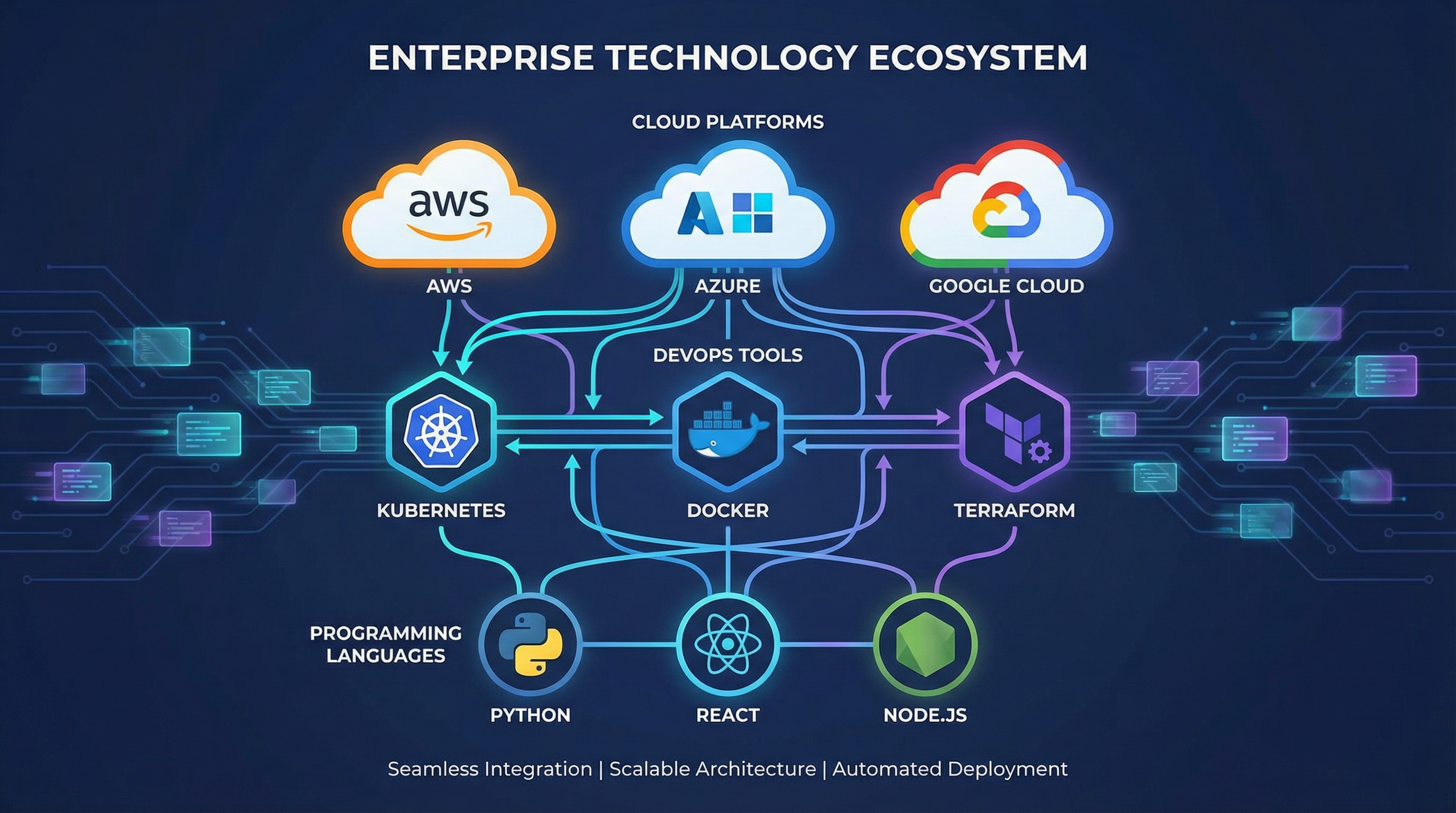
Cloud Platforms
- • AWS (Amazon Web Services)
- • Microsoft Azure
- • Google Cloud Platform
DevOps & Infrastructure
- • Kubernetes (Container orchestration)
- • Docker (Containerization)
- • Terraform (Infrastructure as Code)
Programming & Development
- • Python (Backend development)
- • React (Frontend development)
- • Node.js (JavaScript runtime)
Key Takeaways
Diversified Revenue Model
Multiple revenue streams reduce dependency and create stability through recurring managed services
Enterprise Focus
Targeting high-value customers with significant budgets enables premium pricing and long-term relationships
Comprehensive Integration
Full-stack solutions increase wallet share and reduce customer fragmentation across vendors
Strong Differentiation
Security-first approach and AI/ML capabilities create competitive moat against larger competitors
Scalability Challenges
Professional services model requires significant talent investment; shift to products is critical for growth
Market Opportunity
Enterprise digital transformation and security modernization create substantial addressable market